




艾思科蓝公众号
 您当前浏览器版本过低,为了不影响您的使用,建议您使用最新的谷歌浏览器、火狐浏览器、 360浏览器,更换浏览器后使用更流畅!(注意!双核浏览器请切换为极速模式)




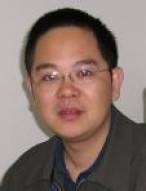
 个人简介
个人简介
科研工作:
2014.12-至今,讲座教授,西北工业大学2011.07-至今,教授,香港科技大学2006.07-2011.06,副教授,香港科技大学2001.07-2006.06,助理教授,香港科技大学 主要从事计算机辅助设计与制造基础理论与算法的研究,包括:· 自由曲面五轴加工轨迹规划· 制造中的优化算法· 几何建模· 曲面高精度加工 [P68] Wen-yong Gong,Yong-jin Liu, Kai Tang, andTie-ru Wu, "Variational discretedevelopable surface interpolation", ASMEJournal of Computing and Information Science in Engineering, vol. 14, No. 2, pp.021002,2014.[P67] Ming Chen2 and Kai Tang*, “G2Quasi-developable Bezier Surface Interpolation of Two Space Curves”, Computer-AidedDesign, Vol. 45, No. 11, pp. 1365-1377, 2013.[P66] Pengcheng Hu1, Kai Tang*, and Chen-Han Lee, “Globalobstacle avoidance and minimum workpiece setups in five-axis machining”, Computer-Aided Design, Vol. 45, No. 10,pp. 1222-1237, 2013.[P65] Ming Chen2and Kai Tang*, “Quasi-developableSurface Modeling of Contours with Curved Triangular Patches”, Computers & Graphics, Vol. 37, No.7, pp. 851 - 861, 2013.[P64] Yong-Jin Liuand K. Tang, "The complexity of geodesic Voronoi diagrams on triangulated2-manifold surfaces", InformationProcessing Letter, 113(4): 132-136, 2013.[P63] Z. Chen1,Kai Tang*, Ajay Joneja, “Fast andAutomatic Identification of Contours for Girth Measurement on 3D Human Modelswith Variant Postures”, Computer-AidedDesign and Applications, 10(2): 321-337, 2013.[P62] Pengcheng Hu1 and K. Tang*,"Improving the dynamics of five-axis machining through optimization ofworkpiece setup and tool orientations", Computer-Aided Design, Vol.43, No. 12, pp. 1693-1706, 2011.[P61] Yong-Jin Liu, K. Tang, Wen-YongGong and Tie-Ru Wu, "Industrial Design using Interpolatory DiscreteDevelopable Surfaces", Computer-Aided Design, Vol. 43, No. 9, pp.1089-1098, 2011.[P60] Yong-Jin Liu, Z. Chen1, and K.Tang, "Construction of Iso-contours, Bisectors and Voronoi Diagrams onTriangulated Surfaces", IEEE Transactions on Pattern Analysis andMachine Intelligence, Vol. 33, No. 8, pp. 1502-1517, Aug., 2011.[P59] Ming Chen1 and K.Tang*, "A Fully Geometric Approach for Developable ClothDeformation", Visual Computer, Vol. 26, No. 6-8, pp. 853-863, June2010 (special issue of Computer Graphics International Conference, June 8-11,2010, Singapore). [P58] Yong-Jin Liu, Wen-Qi Zhang, and K.Tang, "Some Notes on Maximal Arc Intersection of Spherical Polygons:Its NP-Hardness and Approximation Algorithms", The Visual Computer,Vol. 26, No. 4, pp. 287-292, 2010. [P57] Z. Chen1 and K. Tang*,"3D Shape Classification Based on Spectral Function and MDS Mapping",ASME Journal of Computing and Information Science in Engineering, Vol.10, No. 1, 2010.[P56] Charlie Wang and K. Tang,"Pattern Computation for Compression Garment by a Physical/GeometricApproach", Computer-Aided Design, Vol. 42, No. 2, pp. 78-86,2010.[P55] K. Tang* and M. Chen1,"Quasi-developable mesh surface interpolation via mesh deformation", IEEETrans. on Visualization and Computer Graphics, Vol. 15, No. 3, pp. 518-528,2009. [P54] H. Wang2 and K. Tang*,"Biorthogonal Wavelet Construction for Hybrid Quad/Triangle Meshes", TheVisual Computer, 25(4), pp. 349-366, April, 2009.[P53] Nan Wang1 and K.Tang*, "Five-axis tool path generation for a flat-end tool based oniso-conic partitioning", Computer-Aided Design, Vol. 40, Dec.,pp. 1067-1079, 2008. [P52] K. Chen1 and K. Tang*,"Interactive Haptic Refinement of a 5-axis Finishing Cut", ASMEJournal of Computing and Information Science in Engineering, V(8), N(4),December, 2008.[P51] H. Wang2, K. Tang*,and K. Qin, "Biorthogonal Wavelets Based on Gradual Subdivision ofQuadrilateral Meshes", Computer-Aided Geometric Design, Vol. 25,No. 9, pp. 816-836, 2008. [P50] Nan Wang1 and K. Tang*,"Automatic Generation of Gouge-free and Angular-velocity-compliant 5-axisTool path", Computer-Aided Design, Vol. 39, No. 10, pp. 841-852,2007. [P49] Yong-jin Liu2, K. Tang*,and Ajay Joneja3, "Modeling Dynamic Developable Meshes byHamilton Principle", Computer-Aided Design, Vol. 39, No. 9, pp.719-731, 2007. [P48] Hongwei Lin2, K.Tang*, Ajay Joneja3, and Hujun Bao, "Generating strictlynon-self-overlapping structured quadrilateral grid", Computer-AidedDesign, Vol. 39, No. 9, pp. 709-718, 2007.[P47] Charlie Wang and K. Tang, “Wovenmodel based geometric design of elastic medical braces”, Computer-AidedDesign, Vol. 39, No. 1, pp. 67-69, 2007. [P46] H. Wang2, K.H. Qin, K.Tang*, "Efficient wavelet construction with Catmull-Clarksubdivision", The Visual Computer, Vol. 22, pp. 874-884, 2006(special issue of Pacific Graphics 2006). [P45] K. Tang* and Yong-jin Liu2,"Dynamic medial axes of planar shapes", Lecture Notes in ComputerScience, Vol. 4503, pp. 460 - 468, 2006. [P44] Kun Chen1 and K. Tang*,"Reliable haptic system for collision-free 5-axis tool pathgeneration", Computer-Aided Design &Applications, Vol. 3, No. 5, pp. 629-638,2006.[P43] Yong-jin Liu2, K. Tang*,and Ajay Joneja3, "An efficient implementation of RBF-basedprogressive point-sampled geometry", Lecture Notes in Computer Science,Vol. 4077, pp. 637-642, 2006.[P42] Jinyuan Jia1, Ajay Joneja3,and K. Tang*, "New decomposition scheme of canal surfaces forplanar sections computing", Computer-AidedDesign & Applications, Vol. 3, No.1-4, pp. 349-358, 2006.[P41] Jinyuan Jia1, Ajay Joneja3,and K. Tang, "Robustly computing intersection curves of two canalsurfaces with quadric decomposition", Lecture Notes in ComputerScience, Vol. 3992, pp. 342-349, 2006.[P40] K. Tang*, Charlie Wang, andDanny Z. Chen, "Minimum area convex packing of two convex polygons", InternationalJournal of Computational Geometry and Applications, Vol. 16, No. 1, pp.41-74, Feb. 2006. [P39] Charlie Wang and K. Tang*,"Non-self-overlapping Hermite interpolation mapping: a practical solutionfor structured quadrilateral meshing", Computer-Aided Design, 37/2,pp. 271-283, 2005. [P38] K. Tang* and Yong-jin Liu2,"An optimization algorithm for free-form surface partitioning based onweighted Gaussian images", Graphical Models, Vol 67/1, pp. 17-42,2005. [P37] K. Tang* and Charlie Wang,"Modeling developable folds on a strip", ASME Journal of Computingand Information Science in Engineering, Vol. 5, No. 1, pp. 35-47, 2005. [P36] Charlie Wang, Kai Tang*, Benjamin Yeung1,"Freeform surface flattening based on fitting a woven mesh model", Computer-Aided Design, 37/8, pp. 799-814, 2005. [P35] J. Fu, Ajay Joneja3,and K. Tang, “Modeling wrinkles on smooth surfaces for footwear design”,Computer-Aided Design, 37/8, pp. 815-823, 2005. [P34] Yong-Jin Liu2, K. Tang*,Ajay Joneja3, "2D sketch-based shape modeling with a fast andstable numerical engine", Computers & Graphics, Vol. 29, pp.778-793, 2005. [P33] K. Tang, "Geometricoptimization algorithms in manufacturing", Computer-AidedDesign & Applications, Vol. 2, No. 6,pp. 747-758, 2005. [P32] Charlie Wang and K. Tang*,"Developable triangulation of a strip", Computer-AidedDesign & Applications, Vol. 2, No.1-4, pp. 233-242, 2005.[P31] Jinyuan Jia2, Ajay Joneja3,K. Tang*, "Revolute Quadric Decomposition of Canal Surfaces and ItsApplications", Lecture Notes in Computer Science, Vol. 3515, pp.298-305, 2005.[P30] Charlie Wang and, K. Tang*, "Optimal boundary triangulations of an interpolating ruled surface", ASMEJournal of Computing and Information Science in Engineering, Vol. 5, No. 4,pp. 291-301, 2005. [P29] Yong-Jin Liu2, K. Tang*,Ajay Joneja3, and Matthew Yuen3, "Multiresolutionfree form object modeling with semi-regular mesh reconstruction fromunstructured point cloud", International journal of image and graphics,Vol. 5, No. 4, pp. 765-787, 2005.[P28] Yong-Jin Liu2, K. Tang*,Matthew Yuen3, "Multiresolution free form object modeling withpoint sampled geometry", International journal of computer science andTechnology, Vol. 19, No. 5, pp. 607-617, 2004. [P27] Charlie Wang and K. Tang*,"Non-self-overlapping algebraic grid generation on an n-sidedsurface", International Journal of Numerical Methods in Fluids, Vol.46, No. 9, pp. 961-982, Sept. 2004. [P26] Charlie Wang and K. Tang*,"Achieving developability of a polygonal surface by minimum deformation: astudy of global and local optimization approaches", Visual Computer,Vol. 20, No. 8-9, pp. 521-539, 2004.[P25] Benjamin Yeung1, Kai Tang*,and Charlie Wang, "Fitting a woven fabric model onto a surface based onenergy minimization", Computer-Aided Design & Applications,Vol. 1, pp. 197-206, 2004. [P24] J. Fu, Ajay Joneja3,and K. Tang, “Modeling wrinkles on smooth surfaces for footwear design”,Computer-Aided Design & Applications, Vol. 1, pp. 311-320, 2004. [P23] Jinyuan Jia1, K. Tang*,Ajay Joneja3, "Bi-conic subdivision of surfaces of revolutionand its applications in intersection problems", The Visual Computer, Vol. 20, No. 7, pp. 457-478, 2004.[P22] K. Tang* and Yong-jin Liu2,"A geometric method for determining intersection relations", IEEETrans. on Robotics, Vol.20, No. 4, pp. 636-650, Aug., 2004. [P21] Charlie Wang2 andK. Tang*, "Algebraic grid generation on trimmed surface usingnon-self-overlapping Coons patch mapping", International Journal ofNumerical Methods for Engineering, 60/7, pp. 1259-1286, June, 2004. [P20] Guojin Wang2, K. Tang*,and Chiew-Lan Tai3, "Parametric representation of a surfacepencil with a common spatial geodesic", Computer-Aided Design,36/5, pp. 447-459, 2004. [P19] Charlie Wang, Y. Wang, K. Tang,and Matthew Yuen, "Reducing the stretch in surface flattening by cuttingpaths", Computer-Aided Design, 36/8, pp. 665-677, 2004. [P18] J. Jia1, K. Tang,and K.W. Kwok, "A novel algorithm of computing intersection curves of twosurfaces of revolution", in Geometric Modeling: Techniques,Applications, Systems and Tools, Kluwer Academic Publisher, pp.80-93, ISBN:1-4020-1817-7, 2004.[P17] Yong-Jin Liu1, Matthew Yuen3,K. Tang*, "Manifold-guaranteed out-of-core simplification of largemeshes", the Visual Computer, Vol. 19, Issues 7-8, pp. 565-580, Dec.,2003. [P16] K. Tang* and Yong-jin Liu2,"Maximal intersection of spherical polygons by an arc and its applicationto 4-axis NC machining", Computer-Aided Design, 35/14, pp. 1269-1285,2003. [P15] K. Tang* and Ajay Joneja3, "Traversing the machining graph of a pocket", Computer-Aided Design, 35/11, pp.1023-1040, 2003. [P14] K. Tang* and K. Pang2,"Optimal connections of loops in LOM", Computer-Aided Design, 35/11,pp. 1011-1022, 2003.[P13] K. Tang, "On minimumtraceable partitioning and minimization of tool retractions", Computer-AidedDesign, 32/10, pp.621-624, 2000. [P12] K. Tang*, S. Chou, L.Chen, andT. Woo, "Tetrahedral Mesh Generation for Solids based on Alternating Sumof Volumes", Computers in Industry, 41/1, pp. 65-81, Jan. 2000. [P11] K. Tang, "On computingcontact configurations of a curved chain", Graphical Models and ImageProcessing, Vol. 61, No. 6, Nov. 1999, pp341-361. [P10] K. Tang*, S. Chou and L. Chen,"An Algorithm for Reducing Tool Retractions in Zigzag PocketMachining", Computer-Aided Design, 30/2, 1998. [P9] K. Tang*, S. Chou and L. Chen,"Optimal Workpiece Setups for 4-axis NC Machining", Computers inIndustry, 37/1, pp. 27-41, June 1998. [P8] K. Tang*, M. Wang, L. Chen, S.Chou, T. Woo and R. Janardan, "Computing Planar swept Polygons UnderTranslation", Computer-Aided Design, 29/12, 1997. [P7] K. Tang* and Yakove Dayan,"Offsetting surface boundaries and 3-axis gouge-free surfacemachining", Computer-Aided Design, 27/12, 1995. [P6] J. Gan, T. Woo, and K. Tang,"Spherical maps: their construction, properties and approximation", ASMEJournal of Mechanical Design, Vol. 116, No. 2, 1994. [P5] T. Woo, S. Chou, L. Chen, K. Tang,and S. Shin, "Scallop hull and its offset", Computer-Aided Design,26/7, 1994. [P4] K. Tang, T. Woo, and J. Gan,"Maximum Intersection of spherical polygons and workpiece orientation in4-axis machining", ASME Journal of Mechanical Design, Vol.114, No. 3, 1992. [P3] K. Tang and T. Woo,"Algorithmic aspects of Alternating Sum of Volumes: Part II.Non-convergence and its Remedy", Computer-Aided Design, 23/6, 1991.[P2] K. Tang and T. Woo, "Algorithmicaspects of Alternating Sum of Volumes: Part I. Data Structure and DifferenceOperation", Computer-Aided Design, 23/5, 1991. [P1] K. Tang, "On theintersection of a set of directional cones", Computer Vision, Graphics,and Image Processing, Vol. 45, March 1989.
教育背景:
PhD (Computer Engineering), University of Michigan, 1990MSc (Computer, Information, and Control Engineering)., University of Michigan, 1986BEng (Mechanical Engineering), Nanjing Institute of Technology, China, 1982

资料审核中
您的资料已提交成功!
我们的工作人员会将会在3-5个工作日内和您联系
Copyright © 2019 - 2026 广州科奥信息技术股份有限公司 All Rights Reserved